WW Scale Instructions: A Comprehensive Guide
Welcome! This guide provides detailed instructions for your WW scale‚ covering everything from initial setup to understanding advanced body analysis features.
Explore how to utilize the WW Scale app and customize settings for optimal weight and wellness tracking.
Information sourced from Conair‚ Argos‚ ManualsLib‚ and Weight Watchers documentation as of December 21‚ 2025.
Understanding Your WW Scale
Your Weight Watchers (WW) scale is more than just a device for measuring weight; it’s a sophisticated tool designed to provide a comprehensive overview of your body composition. These scales‚ like the Precision Body Weight Analysis Scale (Argos Product 832/1846) and the WW54C model‚ utilize Bioelectrical Impedance Analysis (BIA) technology.
BIA sends a harmless‚ low-level electrical signal through your body to estimate various metrics. Understanding this technology is key to interpreting the data accurately. The scale measures the resistance to this signal‚ which differs based on body composition – muscle tissue conducts electricity more easily than fat tissue.
The WW scale calculates several key measurements‚ including weight‚ Body Mass Index (BMI)‚ body fat percentage‚ muscle mass‚ and water percentage. These metrics‚ detailed in the WW54C instructions manual‚ offer a more holistic view of your health than weight alone. Remember to consistently use the scale under similar conditions for reliable results. The scale’s functionality is also accessible through the WW Scale app‚ enhancing data tracking and analysis.
Proper understanding of these features will empower you to make informed decisions about your wellness journey.
Unboxing and Initial Setup
Upon receiving your WW scale‚ carefully unpack the box and verify that all components are present. Typically‚ this includes the scale itself‚ battery inserts (if not pre-installed)‚ and a quick start guide. Inspect the scale for any visible damage that may have occurred during shipping.
Before first use‚ insert the required batteries‚ usually located in a compartment on the underside of the scale. Important: According to Conair’s instructions‚ selecting your desired unit of measurement (pounds‚ kilograms‚ or stone) is often done via a switch on the scale’s underside before powering on. This avoids the need to tap the scale to activate it initially.
Place the scale on a hard‚ flat surface. Avoid carpeting or uneven flooring‚ as this can affect accuracy. A stable surface is crucial for reliable measurements. Ensure the scale is positioned where it won’t be accidentally bumped or moved during use.
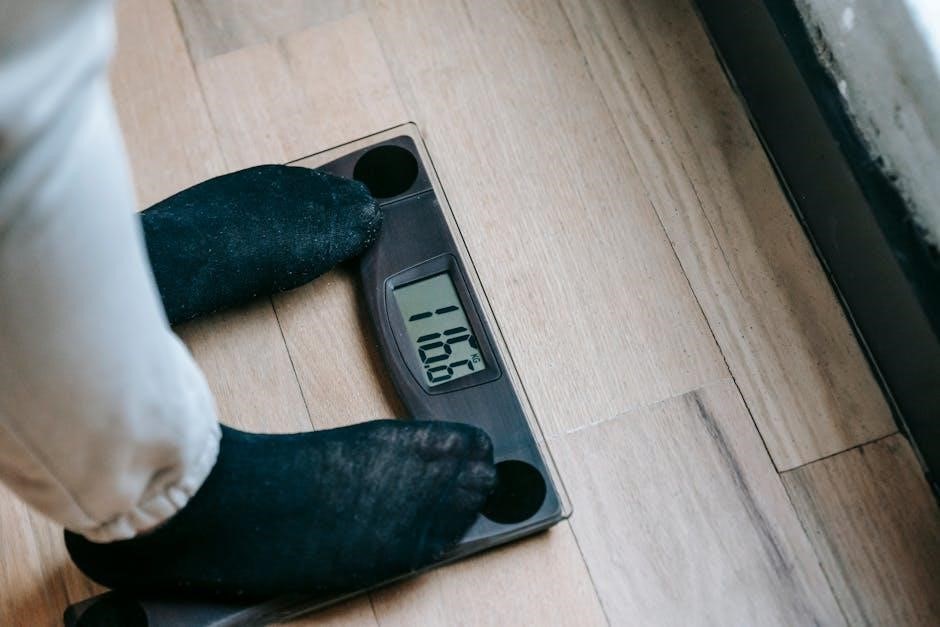
The scale should automatically power on when you step onto it‚ or after the unit selection switch is activated. Refer to the included documentation for specific power-on procedures for your model (WW54C or similar).
Selecting the Unit of Measurement
Choosing your preferred unit of measurement – pounds (lbs)‚ kilograms (kg)‚ or stone (st) – is a crucial first step in setting up your WW scale for accurate tracking. As highlighted by Conair‚ this selection is often performed before the scale is initially powered on‚ streamlining the setup process.
Locate the unit selection switch on the underside of the scale. This is typically a small‚ sliding switch clearly marked with the available units. Gently slide the switch to your desired unit. It’s important to ensure the switch is firmly positioned to prevent accidental changes.
Once selected‚ the scale will display all subsequent weight measurements in the chosen unit. Verify the correct unit is displayed when you first step onto the scale. If not‚ repeat the process of selecting the unit via the underside switch. Consistent use of your preferred unit ensures accurate and comparable weight data over time.
Downloading and Installing the WW Scale App
To unlock the full potential of your WW scale‚ including body analysis features and data tracking‚ you’ll need to download and install the official WW Scale app on your compatible mobile device. The app is available for both iOS (Apple) and Android operating systems.
For iOS users: Open the App Store and search for “WW Scale”. Locate the official app published by Weight Watchers and tap “Get” to begin the download and installation process. You may be prompted to enter your Apple ID password or use Face/Touch ID.
For Android users: Open the Google Play Store and search for “WW Scale”. Find the official app and tap “Install”. Accept any required permissions to allow the app to function correctly on your device.
Once the installation is complete‚ locate the WW Scale app icon on your home screen or app drawer. Tap the icon to launch the app. You will likely be guided through a brief onboarding process‚ including account creation or login. Ensure you have a stable internet connection during the download and installation process.
Pairing the Scale with Your Mobile Device
Successful pairing between your WW scale and mobile device is crucial for data synchronization and access to advanced features. Begin by ensuring Bluetooth is enabled on your smartphone or tablet. Open the WW Scale app you previously downloaded and installed.
The app will typically guide you through the pairing process. First‚ select your unit of measurement on the underside of the scale – this action also wakes the scale‚ eliminating the need to tap it on. The app will then search for nearby Bluetooth devices.
Your WW scale should appear in the list of available devices; Select your scale from the list. You may be prompted to enter a pairing code‚ which is usually displayed within the app or on the scale itself. Confirm the pairing request on both your mobile device and‚ if prompted‚ on the scale.
Once paired‚ the app will confirm the connection. If pairing fails‚ ensure the scale is close to your device‚ Bluetooth is enabled‚ and no other devices are interfering with the connection. Refer to the app’s troubleshooting section for further assistance.
Using the Scale for Basic Weight Measurement
Performing a basic weight measurement with your WW scale is straightforward. Ensure the scale is placed on a hard‚ level surface for accurate readings. Step onto the scale with your feet evenly distributed. Avoid leaning against anything for support‚ as this can affect the result.
The scale will automatically power on when you step on it – remember‚ selecting your unit of measurement on the underside also wakes it up‚ so tapping isn’t always necessary. The weight will be displayed on the scale’s screen. Allow a few seconds for the reading to stabilize before noting the value.
The weight will typically be shown in the unit you previously selected (pounds‚ kilograms‚ or stones). The display will automatically turn off after a short period of inactivity. Ensure your feet are dry for optimal accuracy.
For consistent results‚ weigh yourself at the same time each day‚ wearing similar clothing. The WW Scale app will automatically sync this data if the scale is paired with your mobile device‚ allowing you to track your progress over time.
Understanding Body Analysis Features
Your WW scale offers advanced body analysis capabilities beyond simple weight measurement. These features provide insights into your body composition‚ including Body Mass Index (BMI)‚ body fat percentage‚ muscle mass‚ and water percentage. These metrics help you understand your overall health and track progress towards your wellness goals.
To utilize these features‚ ensure you’ve correctly paired the scale with the WW Scale app on your mobile device. After a basic weight measurement‚ the scale will cycle through these additional metrics. The display will show each value for a few seconds.
It’s important to remember that these measurements are estimations and should not be considered medical diagnoses. Factors like hydration levels and individual body composition can influence accuracy. Consistent use and tracking trends are more valuable than focusing on single readings.
Refer to the WW Scale app for detailed explanations of each metric and how they contribute to your overall health profile. Customizing scale settings within the app may also enhance the accuracy of these analyses.
Body Mass Index (BMI) Calculation
Body Mass Index (BMI) is a widely used calculation that estimates body fat based on your height and weight. Your WW scale automatically calculates your BMI after each weight measurement‚ displaying the result alongside other body analysis data.
The BMI value is categorized into different ranges: underweight‚ normal weight‚ overweight‚ and obese. These categories provide a general indication of whether your weight is healthy for your height. However‚ BMI doesn’t directly measure body fat and doesn’t account for factors like muscle mass.
To interpret your BMI accurately‚ consider it alongside other health indicators. A high BMI doesn’t necessarily mean you have excess body fat‚ especially if you are muscular. Conversely‚ a normal BMI doesn’t guarantee optimal health.
The WW Scale app provides a detailed breakdown of BMI categories and helps you understand your individual results. It’s a valuable tool for monitoring weight trends and assessing overall health‚ but should not replace professional medical advice.
Body Fat Percentage Measurement
Body fat percentage estimates the proportion of your body weight that is fat. Your WW scale utilizes bioelectrical impedance analysis (BIA) to measure this‚ sending a small‚ harmless electrical signal through your body.
BIA measures the resistance to this signal; fat tissue resists the current more than muscle tissue. The scale then uses this resistance‚ along with your height‚ weight‚ age‚ and gender‚ to calculate your body fat percentage.
It’s crucial to ensure consistent measurement conditions for accurate results. Factors like hydration levels‚ recent exercise‚ and food intake can influence BIA readings. Therefore‚ measure at a similar time each day‚ ideally after waking up and before eating or drinking.
The WW Scale app displays your body fat percentage and categorizes it based on established health standards. Remember that BIA is an estimation‚ and results may vary. Use this data as a trend indicator alongside other health metrics and consult with a healthcare professional for personalized guidance.
Muscle Mass Estimation
Muscle mass estimation‚ provided by your WW scale‚ offers an assessment of the weight contributed by muscle tissue in your body composition. Like body fat percentage‚ this measurement relies on bioelectrical impedance analysis (BIA) technology.
The scale sends a safe‚ low-level electrical current through your body‚ measuring resistance. Muscle‚ being more conductive than fat‚ presents less resistance. Combining this data with your personal details – height‚ weight‚ age‚ and gender – the scale estimates your skeletal muscle mass.

Consistent measurement practices are vital for reliable tracking. Hydration‚ recent activity‚ and dietary intake can all affect BIA readings. Aim to measure at a consistent time each day‚ preferably in the morning before consuming food or beverages.
The WW Scale app displays your estimated muscle mass‚ helping you monitor changes over time. This metric is valuable for tracking progress related to fitness and strength training. Remember that BIA provides an estimate‚ and consulting a healthcare professional for a comprehensive assessment is always recommended.
Water Percentage Measurement

Water percentage measurement‚ a key feature of your WW scale‚ estimates the total amount of water contained within your body. This measurement‚ also utilizing bioelectrical impedance analysis (BIA)‚ is crucial as water constitutes a significant portion of overall body composition.
Similar to muscle mass and body fat estimations‚ the scale sends a harmless electrical current through your body. Water is an excellent conductor of electricity‚ offering minimal resistance. The scale analyzes this resistance‚ factoring in your inputted personal data (height‚ weight‚ age‚ gender) to calculate your total body water percentage.
Maintaining adequate hydration is essential for optimal health‚ and tracking your water percentage can provide insights into your hydration status. Fluctuations can be influenced by factors like exercise‚ diet‚ and fluid intake.
The WW Scale app displays your water percentage‚ allowing you to monitor trends. Consistent measurement conditions – time of day‚ hydration levels – are vital for accurate tracking. Remember‚ BIA provides an estimation‚ and professional medical evaluation offers a more precise assessment.
User Memory and Profile Creation
Your WW scale boasts user memory functionality‚ allowing multiple individuals to track their progress with a single device. This feature necessitates creating individual profiles within the WW Scale app to ensure accurate data recording and personalized insights.
Upon initial setup‚ or when adding a new user‚ the app will prompt you to enter essential information: age‚ gender‚ height‚ and weight. This data is crucial for the scale’s bioelectrical impedance analysis (BIA) calculations‚ impacting the accuracy of measurements like body fat percentage and muscle mass.

Each profile stores individual measurement history‚ enabling personalized tracking and trend analysis. The scale can typically store data for several users‚ though the exact number varies by model.
Accurate profile information is paramount. Ensure all details are entered correctly to receive reliable body composition analysis. Regularly updating your profile‚ especially weight changes‚ will further refine the scale’s estimations. The WW app simplifies profile management‚ allowing easy editing and deletion as needed.
Switching Between Users
Effortlessly transition between user profiles on your WW scale. Typically‚ the scale automatically recognizes the user based on weight – it identifies who is standing on the scale and displays the corresponding profile’s data. However‚ manual selection is often available.
If automatic recognition fails‚ or if you wish to specifically choose a profile‚ most WW scales allow you to tap the screen or press a button to cycle through the stored user IDs. The display will show each user’s assigned number or initial.
Ensure the correct user is selected before initiating a measurement. Incorrect user selection will lead to inaccurate data being attributed to the wrong profile‚ skewing long-term tracking.
The WW Scale app may also offer a method for manually selecting the user before each weigh-in. Familiarize yourself with your specific scale model’s instructions for the most efficient switching process. Consistent and accurate user selection is vital for maintaining the integrity of your weight and body composition data.

Troubleshooting Common Issues
Encountering problems? Here’s a quick guide to resolving typical WW scale issues. If the scale won’t turn on‚ first‚ ensure fresh batteries are correctly installed. A simple reset – removing and reinserting the batteries – can often resolve minor glitches.
Connectivity problems with the app? Verify Bluetooth is enabled on your mobile device and that the scale is within range. Try restarting both the scale and your phone. If the scale displays inaccurate readings‚ ensure it’s placed on a hard‚ level surface. Carpets or uneven floors can affect accuracy.
If the app fails to sync‚ check your internet connection and confirm the scale is properly paired. For persistent issues‚ consult the WW Scale app’s help section or the official Weight Watchers support website.
Remember to calibrate the scale periodically (refer to the ‘Scale Calibration’ section) to maintain optimal performance. If problems persist‚ consider contacting Conair consumer products for further assistance.
Replacing Batteries
Low battery indicator? It’s time for a replacement! Your WW scale typically requires standard batteries – check your model’s documentation for the correct type and quantity. Usually‚ this involves opening a battery compartment located on the back of the scale.
Before replacing‚ ensure the scale is switched off. Carefully remove the old batteries‚ noting the correct polarity (+ and -) indicated inside the compartment. Insert the new batteries‚ matching the polarity markings precisely. Incorrect insertion can damage the scale and void your warranty.
Once the batteries are in place‚ close the compartment securely. The scale should power on automatically. If it doesn’t‚ double-check the battery installation. Dispose of used batteries responsibly‚ following local regulations for battery recycling.
Regular battery replacement ensures accurate readings and consistent performance. Consider keeping a spare set of batteries on hand to avoid interruptions in your weight tracking routine.
Scale Calibration
Ensuring Accuracy: While your WW scale is pre-calibrated‚ occasional recalibration may be necessary to maintain optimal accuracy‚ especially after battery changes or if the scale has been moved. Calibration ensures consistent and reliable weight measurements.
The calibration process typically involves placing the scale on a hard‚ level surface. Then‚ follow the instructions within the WW Scale app. The app will guide you through a series of steps‚ often requiring you to tap the scale’s surface a specific number of times or enter a known weight.
Some models may have a dedicated calibration button on the underside of the scale. Refer to your user manual for specific instructions related to your WW scale model. Avoid calibrating on carpet or uneven surfaces‚ as this can affect the results.
Regular calibration‚ as needed‚ contributes to the long-term accuracy and reliability of your WW scale‚ helping you stay on track with your weight loss or wellness goals.
Customizing Scale Settings
Personalizing Your Experience: The WW Scale app allows for extensive customization to tailor the scale to your individual preferences and needs. These settings enhance usability and provide a more personalized tracking experience.
Within the app‚ you can adjust settings such as the unit of measurement (pounds‚ kilograms‚ or stones). You can also configure display preferences‚ including screen brightness and auto-off timers. Further customization includes setting up user profiles‚ managing data synchronization‚ and adjusting body analysis parameters.
Explore options for customizing the information displayed on the scale’s screen. Some models allow you to prioritize specific body composition metrics. You can also manage notification settings to receive reminders or alerts related to your weight tracking progress.
Remember to save your changes within the app after making any adjustments. Regularly reviewing and updating these settings ensures your WW scale operates optimally and provides the most relevant data for your wellness journey.
Cleaning and Maintenance
Preserving Accuracy and Hygiene: Proper cleaning and maintenance are crucial for ensuring the longevity and accuracy of your WW scale. Regular upkeep also promotes a hygienic experience.
To clean the scale‚ always disconnect it from power or remove the batteries first. Use a slightly damp cloth to wipe down the surface of the scale. Avoid using harsh chemicals‚ abrasive cleaners‚ or excessive water‚ as these can damage the sensors or electronic components.

Pay particular attention to the electrode areas if your scale features body analysis capabilities. Ensure these are clean and free of any residue. Avoid immersing the scale in water or any other liquid.

Store the scale in a dry‚ stable location away from direct sunlight and extreme temperatures. Avoid placing heavy objects on top of the scale when not in use. Periodic inspection for any signs of damage is recommended. Following these simple steps will help maintain your scale’s performance and extend its lifespan.
Leave a Reply
You must be logged in to post a comment.